Tankless water heater maintenance includes periodic descaling, filter checks, and system inspections. Flushing intervals depend on your model, water quality, and household use. The U.S. Department of Energy says manufacturer schedules can range from twice a year to once every three years. Mineral scale can restrict water flow, reduce efficiency, and damage the heat exchanger.
Rinnai recommends flushing at least once a year. Its instructions specify four gallons of undiluted white vinegar and say the procedure may take up to 45 minutes, but your heater’s manual should guide the method and timing. Bud Matthews Services has served Chapel Hill, Durham, and Chatham County since 1981. Knowing what to check and when to arrange a plumbing inspection can help you address maintenance needs before your hot water is disrupted.
Key Takeaways
Your tankless water heater’s flushing schedule should follow its exact model manual, since manufacturer intervals range from twice a year to once every three years based on model, water quality, and household use.
Mineral scale can restrict water flow, reduce efficiency, and damage the heat exchanger, so arrange diagnosis for fluctuating hot water, reduced flow, unusual noises, error displays, or shutdowns rather than assuming scale is the cause.
Your heater’s manual should guide the flushing solution, timing, valve sequence, and filter care; Rinnai recommends flushing at least once a year, but that recommendation does not apply to every brand.
A water test can help you compare hardness with your model’s requirements, since some manufacturers may require a softener above thresholds ranging from 8 to 14 grains per gallon or higher.
What Does Tankless Water Heater Maintenance Include?
Tankless water heater maintenance includes periodic descaling, cleaning or replacing applicable filters, and inspection. The right schedule depends on your heater’s model, water quality, and household use.
Unlike a tank heater, a tankless unit does not store a large volume of hot water, but its internal parts still need care. Minerals dissolved in incoming water can leave deposits as water passes through the heat exchanger. The U.S. Department of Energy defines scaling as mineral deposits inside the heat exchanger or other components. The agency warns that scale can restrict flow, reduce efficiency, and damage the heater.
Routine care may include flushing or descaling when the manufacturer recommends it, cleaning or replacing applicable filters, and watching for changes in hot water flow or performance. Filter types and cleaning instructions vary by model, so check the manual before removing or cleaning a filter.
A plumber can check your heater’s model, service access, and maintenance history before recommending what work is due. This helps match upkeep to your specific unit instead of relying on a schedule that may not fit your home.
How Often Should You Flush a Tankless Heater?
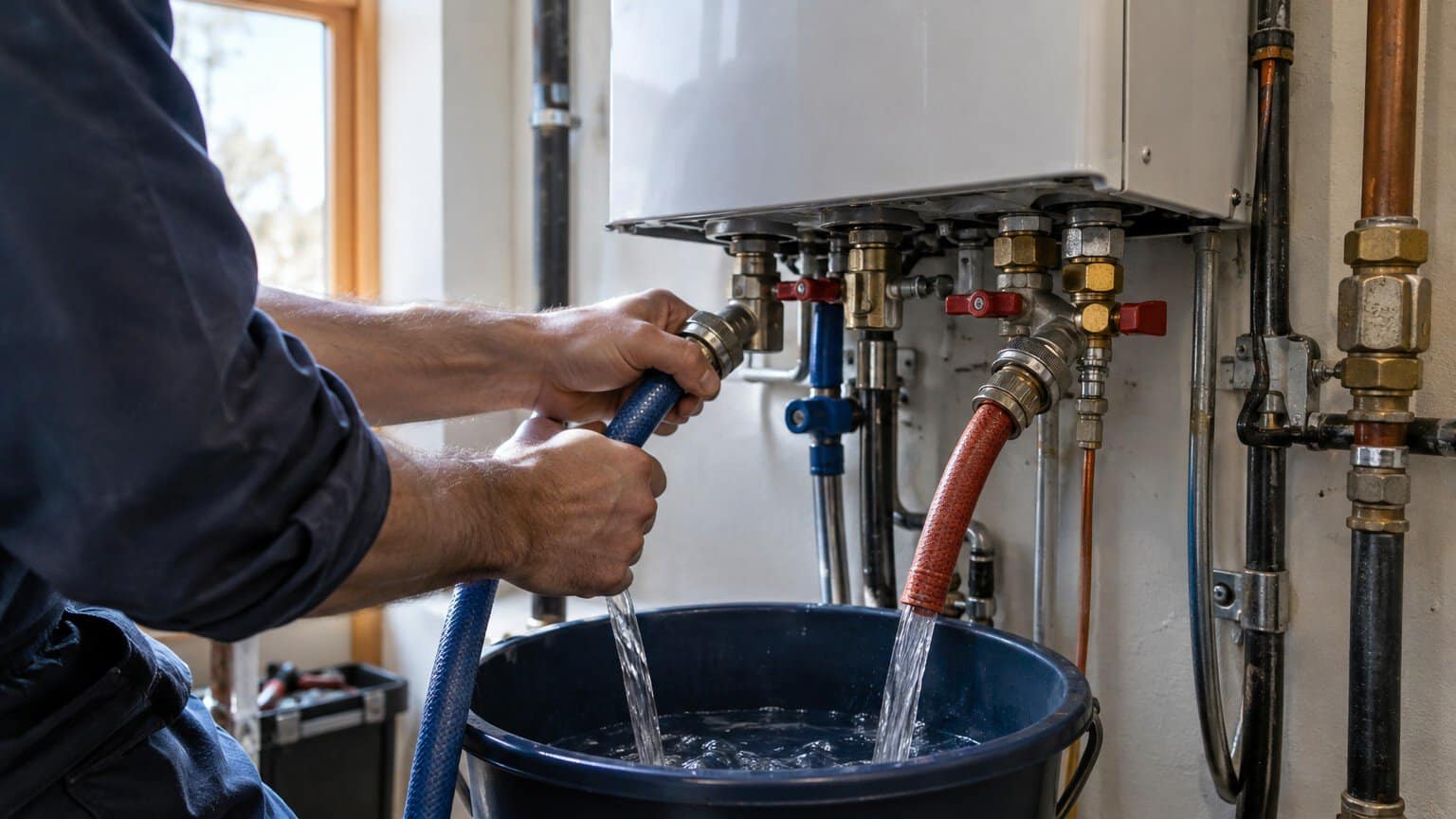
Flush your tankless water heater according to the schedule in its manual, since the right interval varies by home. The U.S. Department of Energy says manufacturer recommended intervals can range from twice a year to once every three years, depending on the model, water quality.
Rinnai recommends flushing its heaters at least once a year, but follow the manual for your specific unit. That annual recommendation applies to Rinnai heaters, not every brand.
Hard water can increase the risk of mineral buildup, and frequent hot water use means more water passes through your heater. Use your unit’s manual to decide how often to flush and what other maintenance the manufacturer recommends.
Check the schedule for your exact model, since instructions can vary within a product line. Keep a simple record of flush dates and filter cleaning or replacement so you can track upkeep and share a clear service history with your plumber.
How Do You Flush and Clean the Filters?
Flushing a tankless water heater involves isolating the unit, circulating a manufacturer approved cleaning solution through the heat exchanger, rinsing as directed, and returning the heater to service. Valve layouts and instructions vary, so use the steps below only as a general outline, not as instructions for every model.
When your manual calls for descaling, the process generally involves:
Isolate the heater using the service valves specified in your manual.
Circulate the approved cleaning solution through the heat exchanger as directed.
Rinse the heat exchanger according to the manufacturer’s instructions.
Return the heater to service by following the manual’s directions.
Rinnai’s procedure specifies four gallons of undiluted white vinegar and may take up to 45 minutes. Follow your own model’s instructions for the cleaning solution, timing, and valve sequence, even if your heater is made by Rinnai.
Descaling is different from routine filter care. Some heaters have water filters in the line that need cleaning or replacement, and some indoor models also have air filters.
What Warning Signs Can Scale Cause?
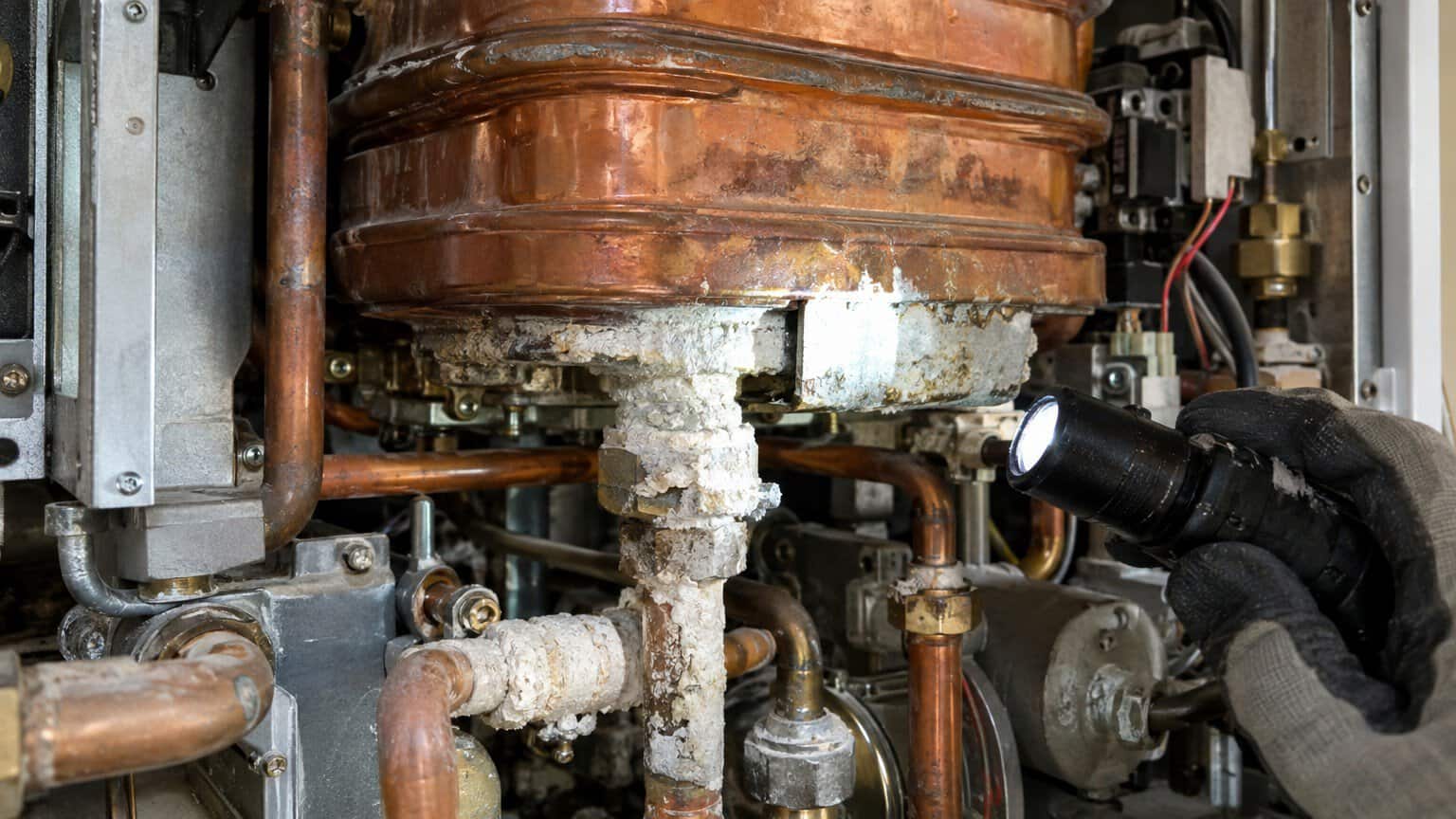
Scale can affect a tankless water heater’s performance, but no single warning sign confirms that mineral buildup is the cause.
Watch for changes that need investigation:
Hot water that fluctuates in temperature, reduced water flow, unusual noises, an error display, or the heater shutting down.
Mineral deposits can restrict water flow through the heater and reduce its efficiency. Other issues can also cause these symptoms, so a technician should diagnose your heater before recommending cleaning or repairs.
Arrange prompt service if your heater repeatedly stops, leaks, or cannot provide dependable hot water. Bud Matthews Services offers 24 hour emergency support for plumbing emergencies.
A service visit can include checking your heater and its filters, reviewing its maintenance history, and determining whether cleaning or repair is needed. A diagnosis can help identify the cause instead of treating every performance change as scale buildup.
How Does Water Quality Change the Schedule?
Your tankless water heater maintenance schedule should reflect your model’s manual and your water conditions. Mineral content varies by supply and affects how quickly scale can form (U.S. Department of Energy guidance). Water conditions can differ between homes in Chapel Hill, Durham, and nearby areas, so do not assume every local supply is uniformly hard or soft.
A water test can help identify your water’s hardness, and your heater’s manual can show what level its manufacturer allows. The U.S. Department of Energy guide says some manufacturers may require a water softener when hardness exceeds model thresholds ranging from 8 to 14 grains per gallon or higher. Thresholds vary by manufacturer, so a softener is not automatically necessary for every home.
Compare your test results with your heater’s requirements before deciding whether a softener is appropriate. The right maintenance schedule can help limit scale that restricts water flow and interferes with efficient operation. If you are unsure how to interpret the manual or test results, a plumber can help assess your specific unit.
Tankless vs. Traditional Tank Maintenance
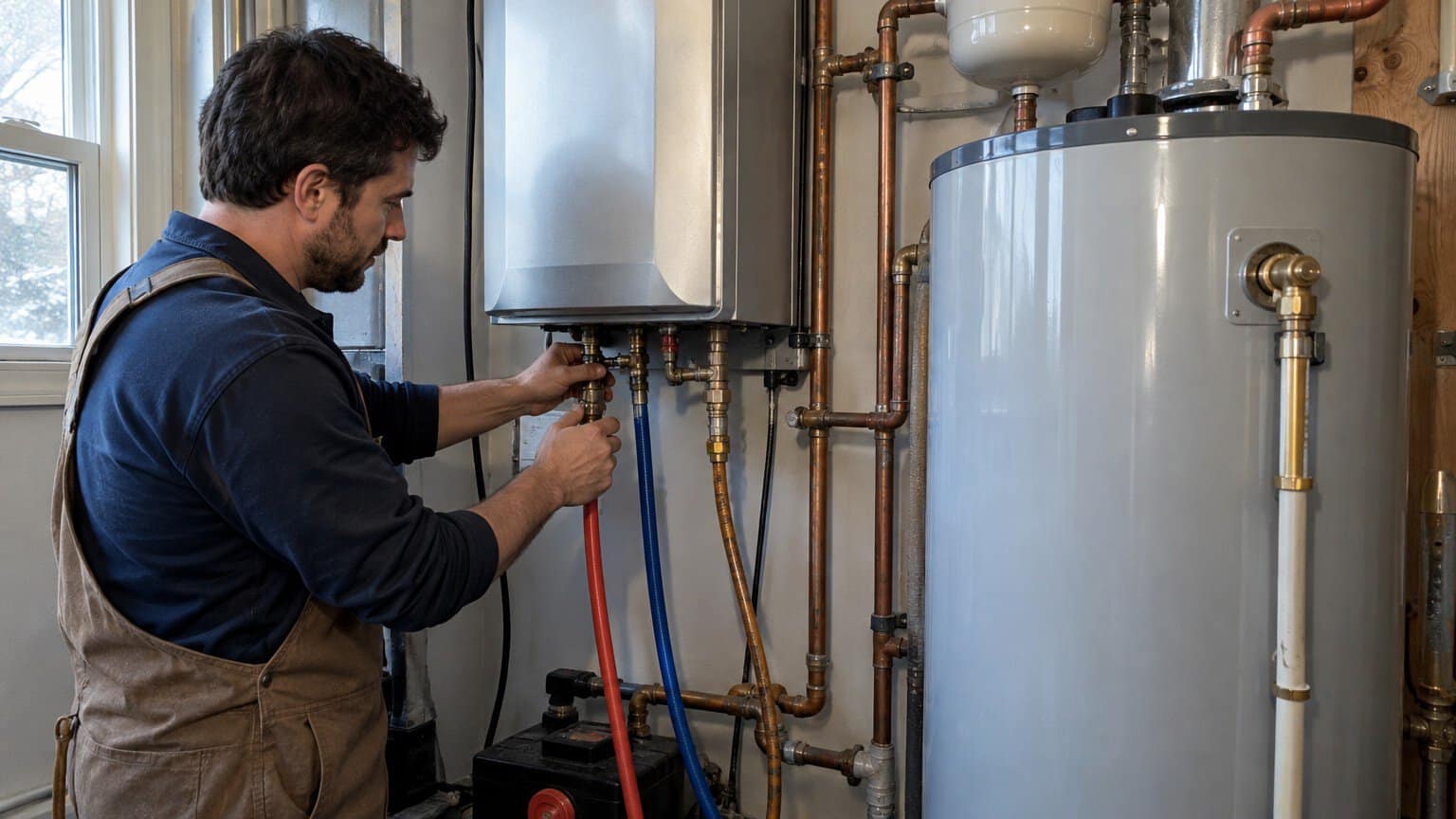
Tankless and traditional tank water heaters need different maintenance. Tankless service focuses on mineral scale in the heat exchanger, filters, and other parts specified for your model. Storage tank maintenance focuses on the tank and its components, such as sediment and the anode rod.
Tankless systems still need maintenance. Water does not sit in a large storage tank, but dissolved minerals can leave deposits on heated surfaces and restrict flow. A tankless design does not prevent scale from forming.
Routine tankless flushing or descaling service generally runs about $150 to $350. The final price depends on your region and the job’s complexity, so ask what inspection, cleaning, and filter work the visit includes instead of comparing prices alone.
Bud Matthews Services is family owned and has served Chapel Hill, Durham, and Chatham County since 1981. You can schedule plumbing service when your tankless heater needs maintenance or repair.
Schedule Tankless Water Heater Maintenance
Find your tankless heater’s model number and the maintenance section in its owner’s manual. Check the recommended flush interval and the date of the last service. If the service history is missing or your heater is due for maintenance, schedule a plumbing inspection instead of guessing when to service it.
Before your appointment, note any temperature changes, reduced flow, error displays, or shutdowns. Share those details and your filter cleaning history with the plumber. Ask the plumber to check the maintenance steps against your exact model, since flushing methods and filter care can differ between units.
Bud Matthews Services is a family owned home services provider serving Chapel Hill, Durham, and Chatham County since 1981. Our plumbing team can assess your heater’s maintenance needs and discuss whether cleaning, filter care, or repair is appropriate. If your unit has stopped working or is leaking, call for service. 24 hour emergency support is available.
Call Bud Matthews Services at 919.929.0203 to schedule tankless water heater maintenance in Chapel Hill, Durham, or Chatham County.
Frequently Asked Questions
1. Can you use hot water while a tankless heater is being flushed?
Plan not to use hot water while your tankless heater is being flushed. The heater is out of normal operation during the process, and its service valves isolate it from the plumbing.
2. Does descaling affect a tankless water heater’s warranty?
Descaling does not affect every tankless water heater warranty in the same way. Check your warranty terms and owner’s manual for required maintenance, approved cleaning solutions, and service procedures before you begin.
3. Do electric tankless water heaters need descaling too?
Yes, an electric tankless water heater can develop mineral scale, just like a gas model. The U.S. Department of Energy explains that scale can form inside a water heater’s heat exchanger or other components. Follow your exact model’s manual for the recommended descaling schedule.