
Quartz and granite countertops involve a practical tradeoff. Quartz has more consistent patterns and does not need routine sealing, while granite has natural variation and typically needs sealing about once a year. Neither is universally better. Your choice depends on your preferred style, budget, cooking habits, and care preferences.
Broad 2026 estimates put quartz at $50 to $200 per square foot, including materials and labor. Granite estimates range from $40 to $100 for materials or $70 to $185 installed, so the figures are not directly comparable. Review the full project scope, including fabrication and installation, when comparing prices.
Key Takeaways
Quartz countertops offer more consistent patterns and do not need routine sealing, while granite countertops have natural slab to slab variation and typically need sealing about once a year.
Consumer Reports rated quartz and granite Excellent for cutting, abrasion, and heat resistance, while quartz scored 2.3 points higher than granite on a 100 point stain resistance scale for substances such as beet juice and food coloring.
Compare itemized installed quotes rather than headline prices, since quartz estimates range from $50 to $200 per square foot including materials and labor, while granite estimates range from $40 to $100 for materials or $70 to $185 installed.
Review slab layout, seams, edges, and cutouts, and coordinate your countertop choice with your sink, faucet, cabinets, and appliances before finalizing your kitchen plans.
Which Countertop Fits Your Kitchen?
Quartz may suit your kitchen if you want a consistent look and less routine sealing. Granite may suit you if you prefer natural variation and are comfortable with periodic sealing. Your style, budget, cooking habits, and care preferences should guide your choice.
Quartz countertops are engineered from mineral material, resin, and pigments. Granite is natural igneous rock. In its tests, Consumer Reports rated both materials Excellent for cutting, abrasion, and heat resistance. Its stain tests favored quartz for some substances, so stain resistance may be worth considering if you cook often or often clean up spills.
Appearance, stain resistance, upkeep, and installed cost are the main tradeoffs to weigh. Quartz offers more controlled patterns, while granite’s natural mineral patterns vary from slab to slab. Consider how each look fits your cabinets and how much care you want to take with sealing and spills. When comparing costs, look at the full installed project, including fabrication and installation, rather than material prices alone.
What Are Quartz and Granite?
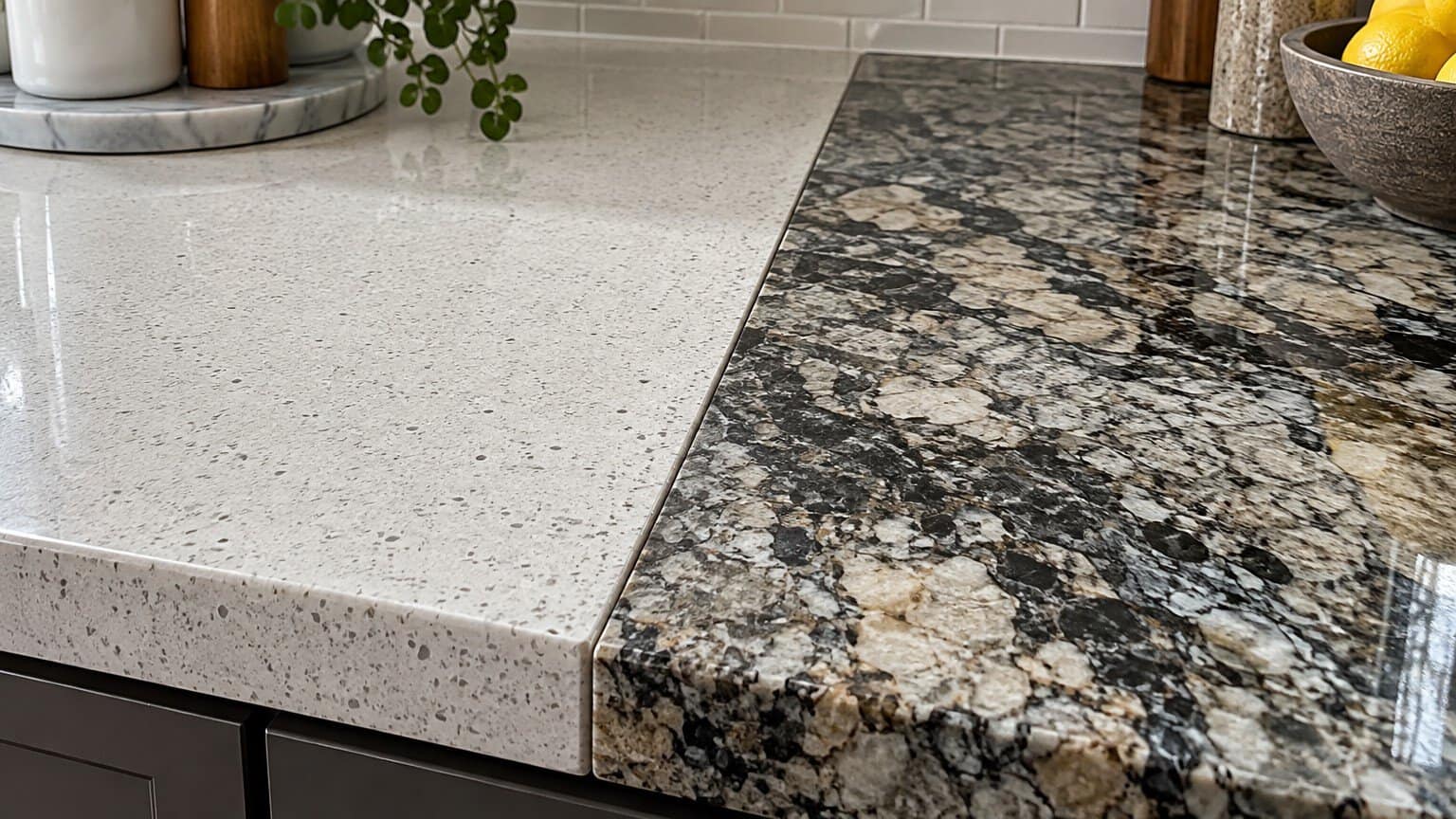
Granite is a natural igneous rock, while countertop quartz is an engineered surface made from mineral material combined with resin and pigments. The U.S. Geological Survey describes granite as coarse grained and composed of quartz, feldspar, and mica. As granite forms, its mineral makeup creates natural variations in color and pattern.
Granite slabs can differ from one another, including slabs cut from the same type of stone. Manufacturers produce quartz colors and patterns for a more consistent appearance across slabs and countertop sections. This difference comes from each material’s origin: granite’s appearance develops in nature, while quartz’s appearance is shaped during production. Neither material is automatically more durable or valuable because of that difference.
How Do Durability and Care Compare?
Quartz and granite both rated Excellent for cutting, abrasion, and heat resistance in Consumer Reports tests, but quartz resisted some stains slightly better. For certain substances, including beet juice and food coloring, quartz scored 2.3 points higher than granite on a 100 point stain resistance scale.
Granite typically needs sealing about once a year to help protect the surface. Professional sealing can add $100 or more if the service is not included in installation. Quartz does not have the same sealing routine, though care needs can vary by product.
Use cutting boards for food prep and trivets under hot cookware on either surface. Strong test results do not mean a countertop is immune to scratches, stains, or heat damage. Wipe up spills promptly, especially colorful liquids, and follow the care instructions for your specific countertop product.
What Do Quartz and Granite Cost?
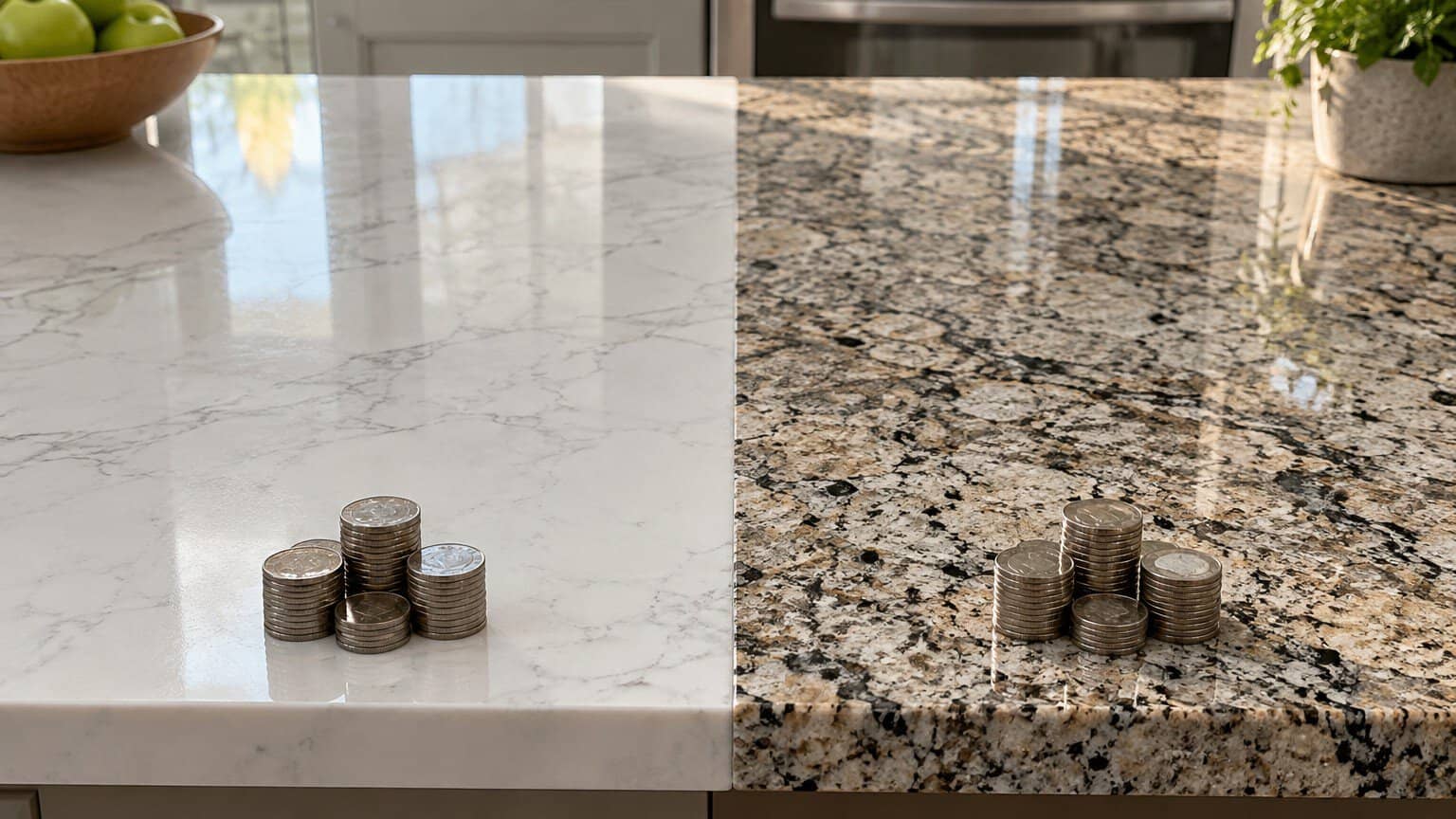
Quartz may cost more than granite, but the estimates are not directly comparable because they cover different pricing categories. Quartz ranges from $50 to $200 per square foot, including materials and labor, while granite ranges from $40 to $100 for materials or $70 to $185 installed.
Your final price depends on the slab you select and the size of your countertop area. Edge details and cutouts affect fabrication, while removal of existing counters, fabrication, and installation also affect the quote. A large area or detailed design can change the amount of material and work involved.
Ask for an itemized quote that lists the slab, edge details, cutouts, removal, fabrication, and installation. Check that each quote includes the same work and materials before comparing totals. A per square foot figure may leave out key project costs, so use it as a starting point rather than your only basis for choosing.
Compare Appearance, Layout, and Installation
Granite is natural stone, so each slab has its own mineral pattern and color variation. Engineered quartz offers more predictable pattern and color options, which can make it easier to match separate countertop sections.
Slab layout affects how veins or flecks appear, and seam placement can change whether a pattern looks continuous, especially across a long counter or island. Edge profiles, from a simple square to a rounded edge, shape the finished style, while sink and cooktop cutouts require precise fabrication. The number, size, and placement of cutouts, along with the edge and seam details, can affect the quote. Ask to review the planned layout and listed work before approving a price.
Cutting stone can create respirable crystalline silica dust, which can lead to silicosis. For general industry, OSHA sets an action level of 25 micrograms per cubic meter and a permissible exposure limit of 50 micrograms per cubic meter, both averaged over an 8 hour day. Ask how fabrication and installation are handled safely, including how workers control dust during cutting.
Plan Countertops With Your Remodel
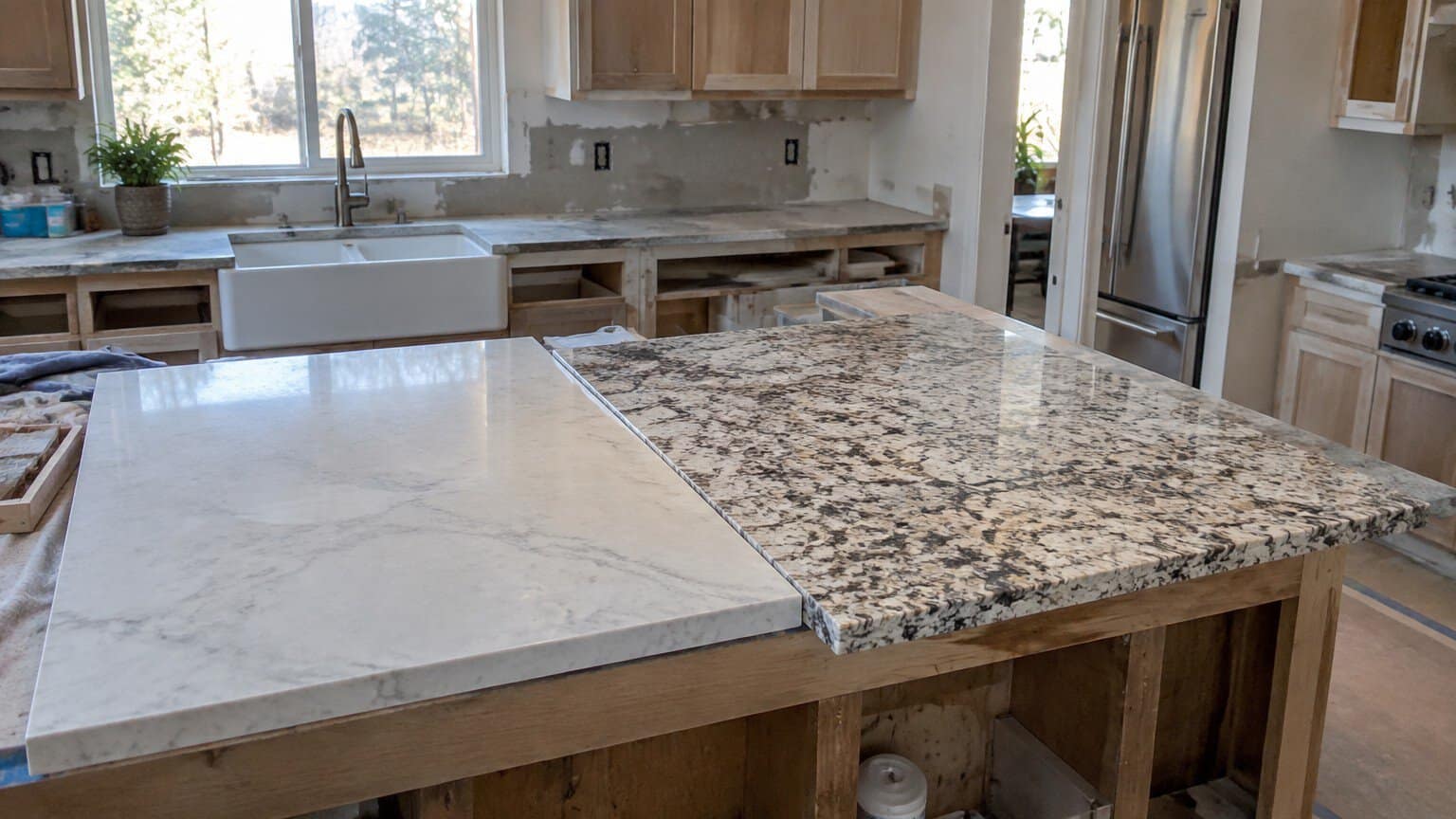
Your quartz or granite choice affects more than the color and pattern of your work surface. Sink cutouts and faucet reach need to match your plumbing plan, while countertop edges and overhangs can affect cabinet details and appliance clearances.
Choose your countertop material before finalizing related layouts and fixtures. Confirm the sink and faucet style, cabinet dimensions, and appliance placement together. Plan electrical needs at the same time, including outlet locations and task or pendant lighting, since the island layout and countertop surface can affect where lights work best.
Bud Matthews Services provides licensed design build construction, which can help you coordinate countertop, cabinet, plumbing, and electrical decisions for your kitchen project. The family owned company has served Chapel Hill, Durham, and Chatham County since 1981.
Plan Your Chapel Hill Countertop Project
Before requesting a countertop project discussion, decide whether you are replacing only the counters or planning a wider kitchen renovation. Gather photos of your current kitchen, cabinet drawings if you have them, and appliance information. Then note which parts of the room are included in the work.
You do not need to select every finish or fixture before asking about the project. Bring questions about renovation details you have not settled so you can discuss the right scope for your home.
Bud Matthews Services offers licensed design build construction, along with plumbing and electrical work, so you can discuss related renovation needs with one local contractor.
Call 919.929.0203 or visit BudMatthews.com to discuss your Chapel Hill countertop project.
Frequently Asked Questions
1. Can you use Clorox wipes on a quartz countertop?
Check the care instructions for your specific quartz product before using Clorox wipes, since cleaner formulas can vary. If the instructions do not list the product, use a cleaner they approve instead.
2. Why is quartz in decline?
The available pricing and performance information does not establish a general decline in quartz countertops. One concern is worker exposure during fabrication, because cutting engineered stone can release respirable crystalline silica dust.
3. How can you tell quartz from granite after installation?
Granite usually has natural variations in its mineral pattern, while engineered quartz tends to have a more consistent, controlled look. If visual clues are unclear, check your installation records or ask the installer to identify the material.