
A sudden power surge can damage your refrigerator, HVAC system, computers, and other electronics within seconds. A whole house surge protector, also called a surge protective device, helps limit short voltage spikes by directing excess energy away from your home’s circuits. Surges can come from nearby lightning, utility switching, or large motors starting and stopping.
Installed at or near your electrical panel, a listed Type 1 or Type 2 device adds protection throughout your home. It does not provide backup power, correct brownouts, or replace a surge protected power strip or UPS for sensitive equipment. Understanding how it works and where it fits can help you protect your system, your electronics, and your family’s budget.
Key Takeaways
- A whole house surge protector limits short voltage spikes from events such as lightning, utility switching, and motor operation by diverting excess energy away from home wiring and connected equipment.
- Whole house surge protection does not provide backup power, correct brownouts or sustained overvoltage, replace circuit breakers, or guarantee protection from a direct lightning strike.
- Choose a listed Type 1 or Type 2 SPD that matches your electrical service, and have a qualified electrician verify the panel, grounding, wiring, and code-compliant installation.
- Use layered protection: combine a properly installed whole house SPD with a surge strip or UPS for sensitive electronics such as computers, televisions, and networking equipment.
Whole House Surge Protector Overview
A sudden voltage spike can damage sensitive equipment in your home, even when the lights stay on. A whole house surge protector, also called a surge protective device or SPD, installs at or near your electrical service panel. It limits short voltage spikes by diverting excess surge current away from your home’s circuits and connected equipment. These spikes can come from nearby lightning, utility switching, power system faults, or motors and compressors starting and stopping. Your refrigerator, HVAC system, appliances, and electronics may all benefit from this first layer of protection.
A properly listed Type 1 or Type 2 SPD works with your electrical system, but it does not replace a circuit breaker or provide backup power. It will not correct a brownout, sustained high voltage, or every possible effect of a direct lightning strike. You should also use point of use protection, such as a surge protected power strip or uninterruptible power supply, for sensitive electronics. Together, panel protection and point of use protection help reduce the risks from different types of electrical surges.
Whole House Surge Protector Protection Limits
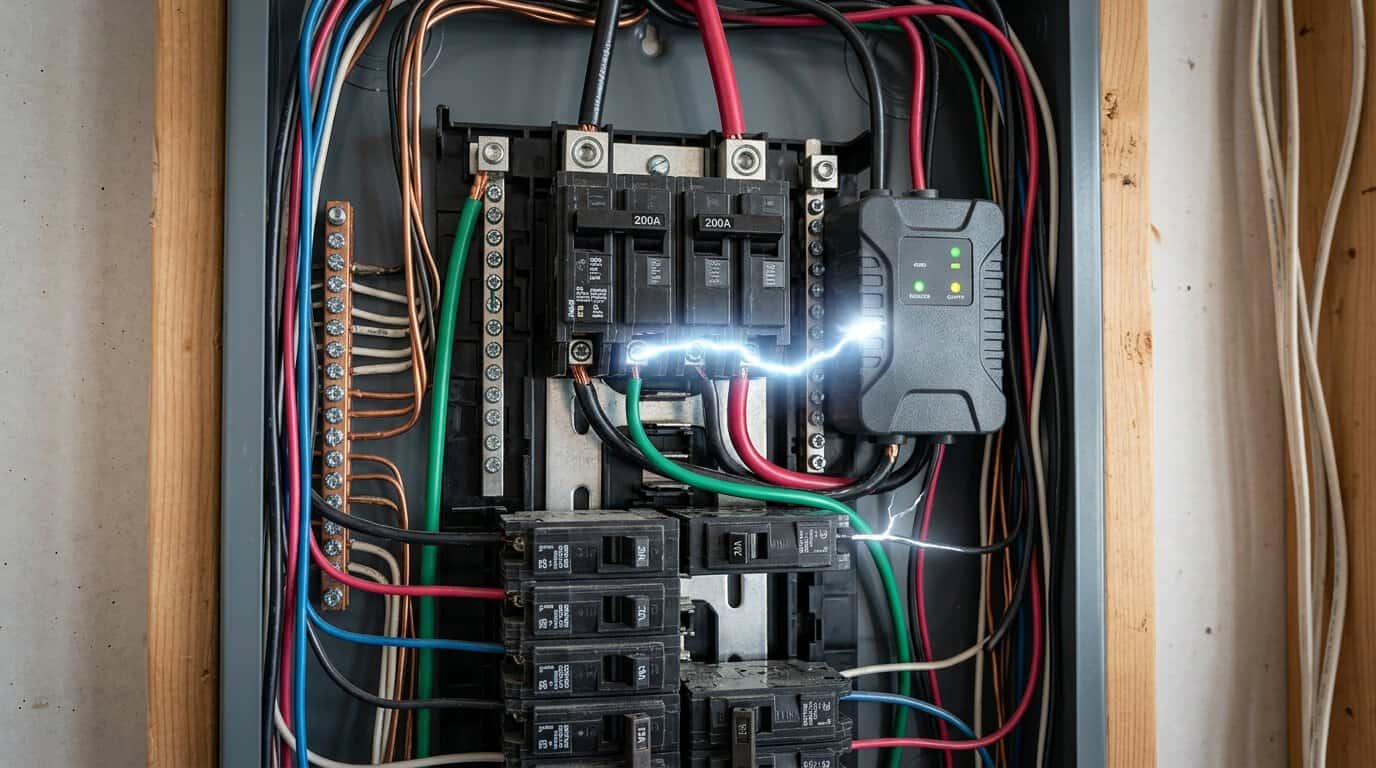
A sudden voltage surge can travel through your home’s wiring and damage appliances, electronics, and connected systems. A whole house surge protector, also called a surge protective device or SPD, limits these short spikes by directing excess energy away from downstream circuits. It can help protect equipment such as your refrigerator, HVAC system, washing machine, television, computer, security system, and smart home devices. It also adds protection for the wiring that connects these systems throughout your home. For sensitive electronics, you should still use point of use protection, such as a surge protected power strip or uninterruptible power supply.
An SPD has important limits that you should understand before relying on it. It does not provide backup power during an outage, correct brownouts or sustained overvoltage, or replace a circuit breaker that protects against overloads and short circuits. It also cannot guarantee protection from a direct lightning strike, which can release extreme energy through multiple paths. A listed Type 1 or Type 2 SPD at your service panel gives your home an important layer of protection, but proper installation and additional protection for sensitive equipment still matter.
Type 1 And Type 2 SPD Installation
A surge can enter your home through utility lines and reach appliances before a plug in surge strip can help. A Type 1 surge protective device, or SPD, installs on the line side of the service disconnect, between the utility supply and your main service equipment. This placement lets it divert surge current before it travels through the main panel and into branch circuits. Type 1 devices are often used where the installation design and local electrical code allow a connection ahead of the service disconnect.
A Type 2 SPD installs on the load side of the service equipment, usually inside or next to your main electrical panel. It connects to a circuit breaker and limits transient voltage after power enters the home, helping protect wiring, appliances, and electronics on downstream circuits. Many whole house surge protectors used in homes are Type 2 devices. You may also install additional Type 2 SPDs at a subpanel when a detached garage, workshop, or other building needs added protection.
Both types require careful attention to wiring, grounding, conductor length, and the manufacturer’s instructions. Installing an SPD at a panel involves working near live electrical equipment, even when some breakers are turned off. An incorrect connection can cause shock, arc flash, equipment damage, or fire. For that reason, you should normally have a qualified electrician select and install the device, confirm that it is listed for your system, and verify that the installation follows local code.
Whole House Surge Protector Ratings
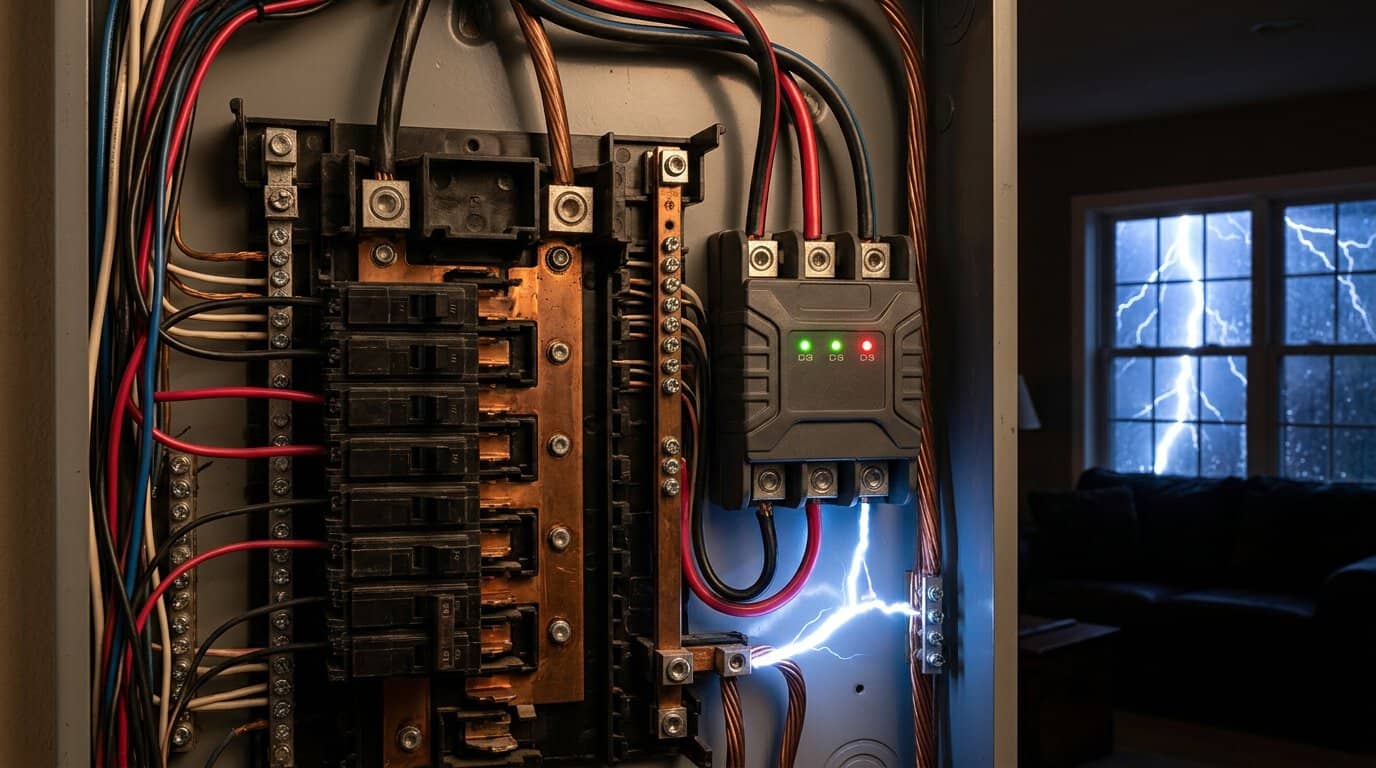
Voltage spikes can damage appliances, even when your circuit breakers do not trip. When comparing a whole house surge protector, first look for a UL 1449 listing, which shows that the device has met recognized safety and performance testing requirements. Check that its voltage configuration matches your electrical service, such as a 120/240 volt split phase system. The maximum continuous operating voltage, or MCOV, is the highest voltage the device can handle during normal operation without conducting unnecessarily. A lower voltage protection rating, or VPR, generally means the device limits surge voltage more effectively.
Current ratings also help you compare how a device handles a surge. Nominal discharge current describes the test current the SPD can safely discharge repeatedly, while maximum surge current shows the peak surge current the device is designed to divert. The short circuit current rating indicates the fault current the unit can withstand when connected to your electrical system. Review the protection modes to confirm coverage between line and neutral, line and ground, and neutral and ground. A higher number is not the only factor, so compare these ratings with your service configuration and the manufacturer’s installation requirements.
Look for clear status indicators that show whether the protective components remain active, and check what happens when they reach the end of their service life. Some units have replaceable modules, while others require replacement of the complete device, so ask about parts and service before you buy. Whole house protection works best as the first layer, not the only layer. Add Type 3 protection, such as a surge protected power strip or uninterruptible power supply, for computers, televisions, networking equipment, and other sensitive electronics. A whole house SPD limits short surges, but it does not provide backup power or correct brownouts and sustained overvoltage.
Choosing Your Whole House Surge Protector
Choosing the right whole house surge protector starts with identifying the electrical system it will serve. Look for a listed surge protective device, or SPD, rated for your system voltage, phase, and service configuration. Type 1 SPDs install on the supply side of the service disconnect, while Type 2 SPDs install at or after the main panel. Your panel design and available space can affect which type fits your home.
The SPD’s ratings should also match your protection goals. Compare its voltage protection rating, surge current rating, and short circuit current rating, but do not choose based on one number alone. Installation details matter because short, properly routed connections help the SPD respond more effectively to a surge. You may still need point of use protection, such as a surge protected power strip or uninterruptible power supply, for computers, entertainment systems, and other sensitive electronics.
Have a qualified electrician inspect your panel, grounding and bonding, and service configuration before the work begins. They can confirm whether your system needs a Type 1 or Type 2 SPD and identify a safe mounting location. They can also check whether additional protection makes sense for wiring that serves equipment such as heating and cooling systems, well pumps, or detached buildings. A properly selected and installed SPD limits transient voltage spikes, but it does not provide backup power or correct ongoing voltage problems.
Whole House Surge Protector Conclusion
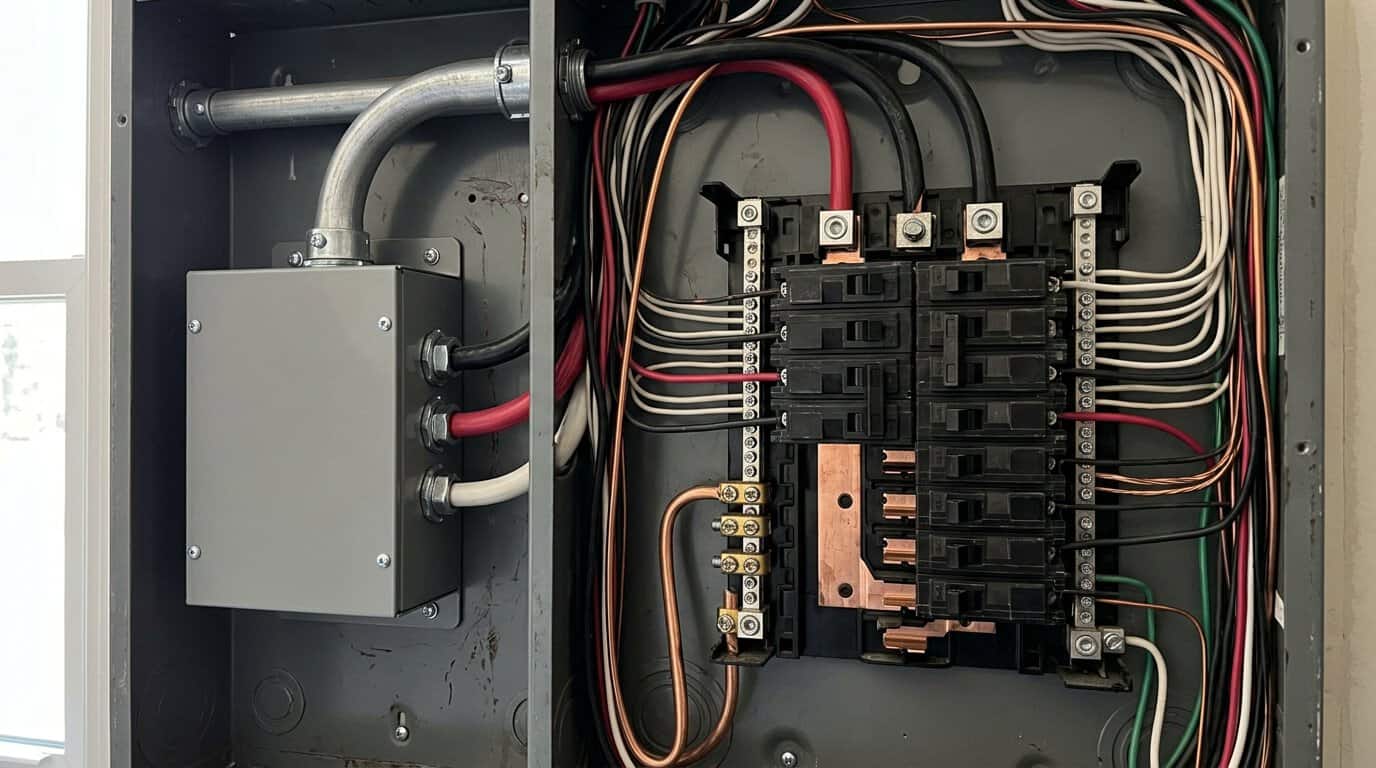
Short duration voltage spikes can reach your home through utility lines or result from nearby lightning, motor switching, and other electrical events. A whole house surge protector, also called a surge protective device, helps limit these spikes by directing excess surge current away from your home’s wiring and connected equipment. It can add an important layer of defense for appliances, HVAC controls, computers, and other electronics. However, it does not provide backup power, correct brownouts or sustained overvoltage, replace a circuit breaker, or guarantee protection from a direct lightning strike.
Professional installation helps confirm that your device is properly connected, grounded, and matched to your electrical service. Ask for a listed Type 1 or Type 2 device at the service equipment, with point of use protection such as a surge protected power strip or UPS for sensitive electronics. Proper ratings matter because every home and electrical system has different needs. With the right device and layered protection, you can reduce surge related risks while keeping realistic expectations about what a whole house surge protector can do.
Protect Your Home From Power Surges
A whole house surge protector can help reduce the risk of damage from short voltage spikes that reach your home’s wiring. Installed at or near your electrical panel, a listed Type 1 or Type 2 surge protective device diverts excess surge current away from connected circuits and equipment. It may help protect appliances, computers, HVAC controls, and other electronics from events caused by nearby lightning, utility switching, or motor operation. However, it does not provide backup power, correct brownouts, replace a circuit breaker, or guarantee protection from a direct lightning strike.
For stronger protection, you should pair a whole house surge protector with Type 3 protection, such as a quality surge strip or UPS, for sensitive electronics. A qualified electrician can review your panel, grounding system, and electrical needs before installing the device according to current requirements. If you have frequent breaker trips or want to confirm your panel can support added protection, explore “Why Does My Circuit Breaker Keep Tripping? Common Causes and Next Steps” to learn more about your options. With the right assessment and layered protection, you can help protect your home’s electrical system and the equipment your family depends on.