
Mineral buildup can quietly reduce your tankless water heater’s flow, increase energy use, and cause uneven temperatures. Regular tankless water heater maintenance helps remove calcium and magnesium deposits before they restrict the heat exchanger, especially in hard water areas around Chapel Hill and Durham. Waiting for an error code or a cold shower can turn a simple cleaning into a larger repair.
Your system may need flushing every six months, once a year, or less often, depending on water quality, usage, temperature, and the owner’s manual. You also need to clean the inlet filter, check for leaks and ventilation concerns, and protect an outdoor unit from freezing. Unlike a traditional tank heater, a tankless system has narrow internal passages that need periodic descaling to keep water moving and heat transfer working properly.
Key Takeaways
- Mineral buildup inside a tankless water heater’s heat exchanger can restrict flow, reduce efficiency, cause temperature fluctuations, and trigger error codes. Regular flushing or descaling prevents these deposits from becoming major problems.
- Follow the owner’s manual for maintenance intervals, which may range from every six months to three years depending on water hardness, usage, temperature settings, and model. Hard-water homes and heavily used systems typically require more frequent service.
- Routine maintenance should include descaling the heat exchanger, cleaning the inlet filter, and checking for leaks, corrosion, ventilation problems, and freezing damage on outdoor units.
- Address warning signs such as reduced flow, lukewarm or fluctuating water, unusual noises, rising energy use, or repeated error codes promptly. Gas-fired systems require professional inspections of burners, gas connections, venting, and safety controls.
Introduction To Tankless Water Heater Maintenance
Mineral buildup can restrict water flow and reduce the heating performance of your tankless water heater. Calcium and magnesium collect inside the heat exchanger, the part that transfers heat to your water, and may cause temperature swings, error codes, or higher energy use. Regular maintenance usually includes flushing the heat exchanger, cleaning the inlet filter, and checking for leaks. Your owner’s manual should set the schedule, which may range from every six months to every three years based on water hardness, usage, temperature settings, and the model.
Tankless systems do not store and repeatedly heat a large tank of water, so they avoid some problems linked to sediment collecting at the bottom of a storage water heater. However, their narrow internal passages make mineral deposits especially important to control. A professional descaling service circulates a cleaner through the heat exchanger to break down buildup without replacing the unit. If your water turns cold during use, flow drops, temperatures change unexpectedly, or the heater shows an error code, schedule an inspection before the problem grows.
Water quality can vary across Chapel Hill, Durham, and nearby communities, so your maintenance needs may not match those of a home across town. Homes with hard water may need more frequent flushing, while a whole house filter or water softener can help reduce mineral deposits. During colder months, protect an outdoor unit from freezing temperatures and check that its freeze protection has power, since a burst component can cause serious damage. Gas burning systems also need regular checks for safe ventilation, proper combustion, and signs of leaks.
Mineral Buildup In Tankless Heat Exchangers
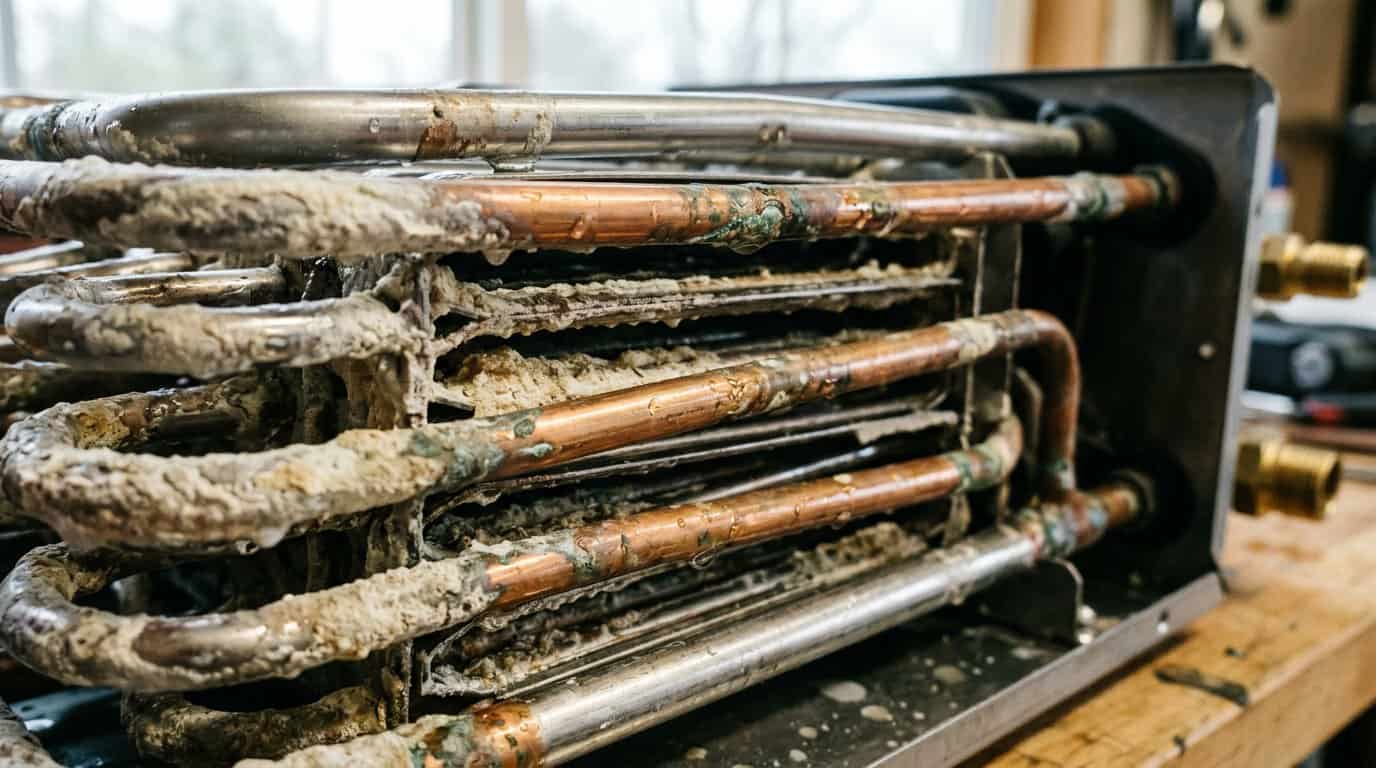
Calcium and magnesium in hard water can collect inside the narrow passages of a tankless heat exchanger. As deposits build, they restrict water flow and create a layer that makes it harder for the burner to transfer heat to the water. You may notice temperature changes during a shower, reduced hot water flow, unusual noises, or error codes on your system. Mineral buildup can also make the unit run longer and work harder, which lowers efficiency and may shorten its service life.
Regular flushing, also called descaling, removes these deposits before they become severe. A technician typically circulates a cleaner approved by the manufacturer through the heat exchanger, then checks the inlet filter for sediment that can further limit flow. Homes in Chapel Hill, Durham, and surrounding areas with hard water may need this service more often, especially when your family uses large amounts of hot water each day. Unlike a traditional tank heater, a tankless system sends water through small heat transfer passages every time you turn on a hot water fixture, so frequent use can increase mineral buildup. Follow your owner’s manual, since recommended maintenance intervals can range from about six months to three years based on water quality, usage, temperature, and the equipment design.
Flushing And Descaling Your Water Heater
Mineral buildup can narrow the passages inside your tankless water heater’s heat exchanger, especially if your home has hard water. A professional begins by turning off the power or gas and closing the water valves to isolate the unit. Service hoses then connect to the heater’s flush ports, and an approved cleaner circulates through the heat exchanger to dissolve calcium and magnesium deposits. After the scale breaks down, the technician drains the cleaner and rinses the system with clean water until no residue remains. The unit is then restored to service and checked for proper water flow, temperature, and leaks.
Your owner’s manual determines how often your system needs flushing and descaling. Depending on water hardness, water temperature, household use, and the manufacturer’s instructions, the schedule may range from every six months to every three years. Homes in Chapel Hill, Durham, and nearby areas may need more frequent service if mineral deposits cause fluctuating temperatures, reduced flow, longer heating times, or error codes. A technician can also clean the inlet filter during the visit, since trapped sediment can restrict flow and reduce efficiency. Regular maintenance helps your heater transfer heat effectively and can reduce strain on the system.
Filters Warning Signs And Water Quality
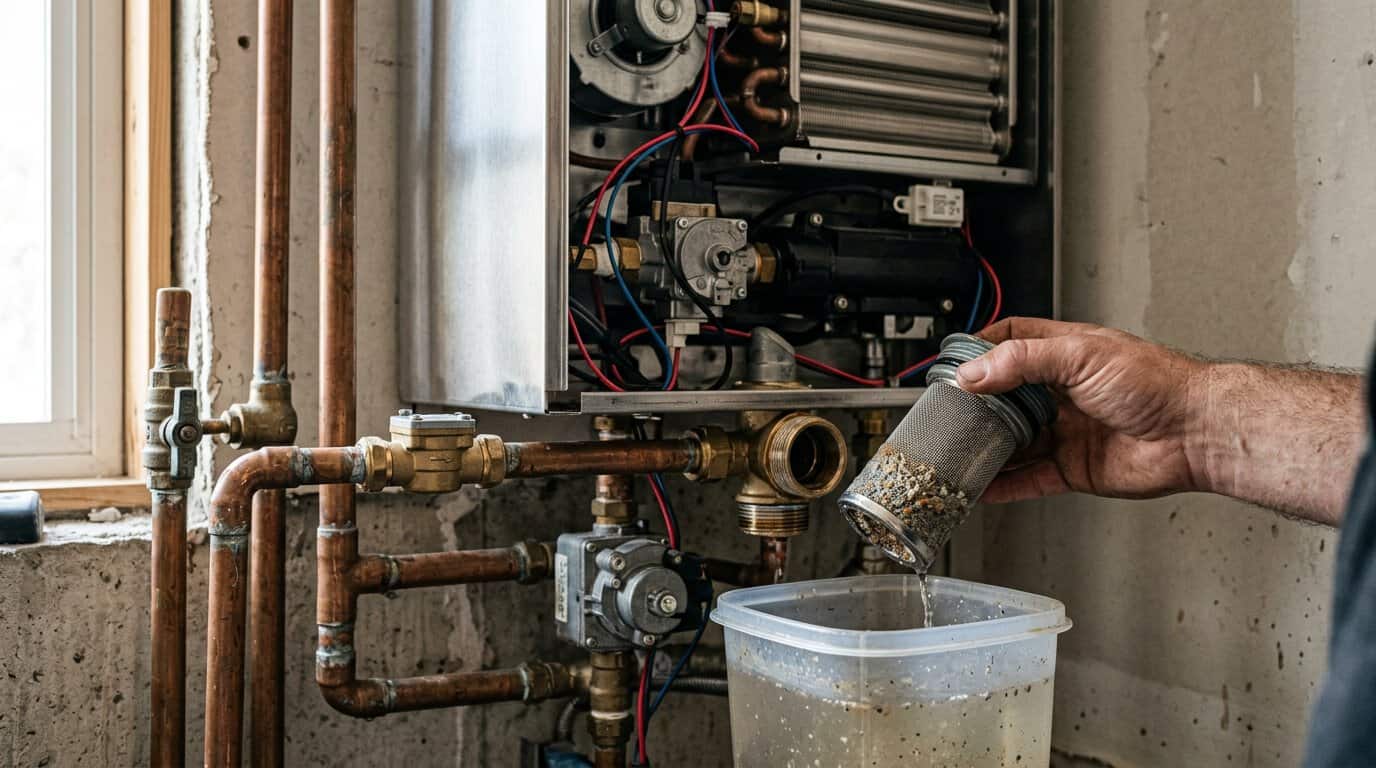
Mineral buildup can restrict the narrow passages inside your tankless water heater’s heat exchanger. Hard water with calcium and magnesium requires periodic flushing, also called descaling, to remove these deposits and protect water flow, heating performance, and efficiency. Follow your owner’s manual, since service intervals may range from about six months to three years based on water hardness, usage, temperature, and the model. You should also clean the unit’s inlet filter as directed, because sediment and debris can reduce the amount of water reaching the heater.
Small problems can become costly when you overlook them. Check for water leaks around the connections, signs of corrosion, and blocked or damaged venting, and protect an outdoor unit from freezing with the measures listed in its installation manual. Error codes, reduced flow, inconsistent temperatures, unusual noises, or rising energy use can point to scale, blocked filters, ignition problems, or another repair need. If your unit burns gas, schedule professional inspections of the burner, gas connections, venting, and safety controls.
Your local water conditions affect how often your system needs attention. Homes in Chapel Hill, Durham, and nearby areas may have different levels of mineral content, sediment, and water treatment chemicals, so one household may need descaling more often than another. A qualified technician can check the heat exchanger, measure system performance, inspect combustion and venting, and recommend a maintenance schedule based on your water and usage. Keeping service records helps you spot changes in efficiency and plan maintenance before a loss of hot water disrupts your family.
Tankless Maintenance And System Efficiency
Mineral buildup can coat the heat exchanger in your tankless water heater and restrict the narrow passages where water flows. In Chapel Hill, Durham, and nearby areas, water quality can vary by home, so hard water may lead to calcium and magnesium deposits over time. These deposits slow heat transfer, which can cause temperature changes, error codes, or reduced hot water flow. Your system may then keep the burner or heating element running longer than needed, increasing energy use. Routine descaling helps the heat exchanger transfer heat efficiently and supports steady performance.
A professional flush removes scale with a cleaner approved for your model. Your technician should also clean the inlet water filter and check for leaks, proper ventilation, and signs of freezing damage on outdoor equipment. Follow your owner’s manual for the service interval, since some systems need cleaning about every six months while others can go as long as three years. Hard water, high temperatures, and heavy household use usually call for more frequent service. Watch for fluctuating water temperature, reduced flow, unusual noises, or repeated error codes, which can signal that your system needs attention.
Tank maintenance often centers on removing sediment from the bottom, checking the anode rod, and preventing corrosion inside the storage tank. A tankless system does not store a large volume of water, so it has no tank sediment layer or anode rod to manage. Its main concern is keeping the heat exchanger and water path clear, along with maintaining safe gas or electrical operation. Regular care can reduce unnecessary burner or element operation and help preserve efficiency. Professional inspection is especially important for gas units, while your manual should guide cleaning and filter care for any system.
Conclusion To Tankless Water Heater Maintenance
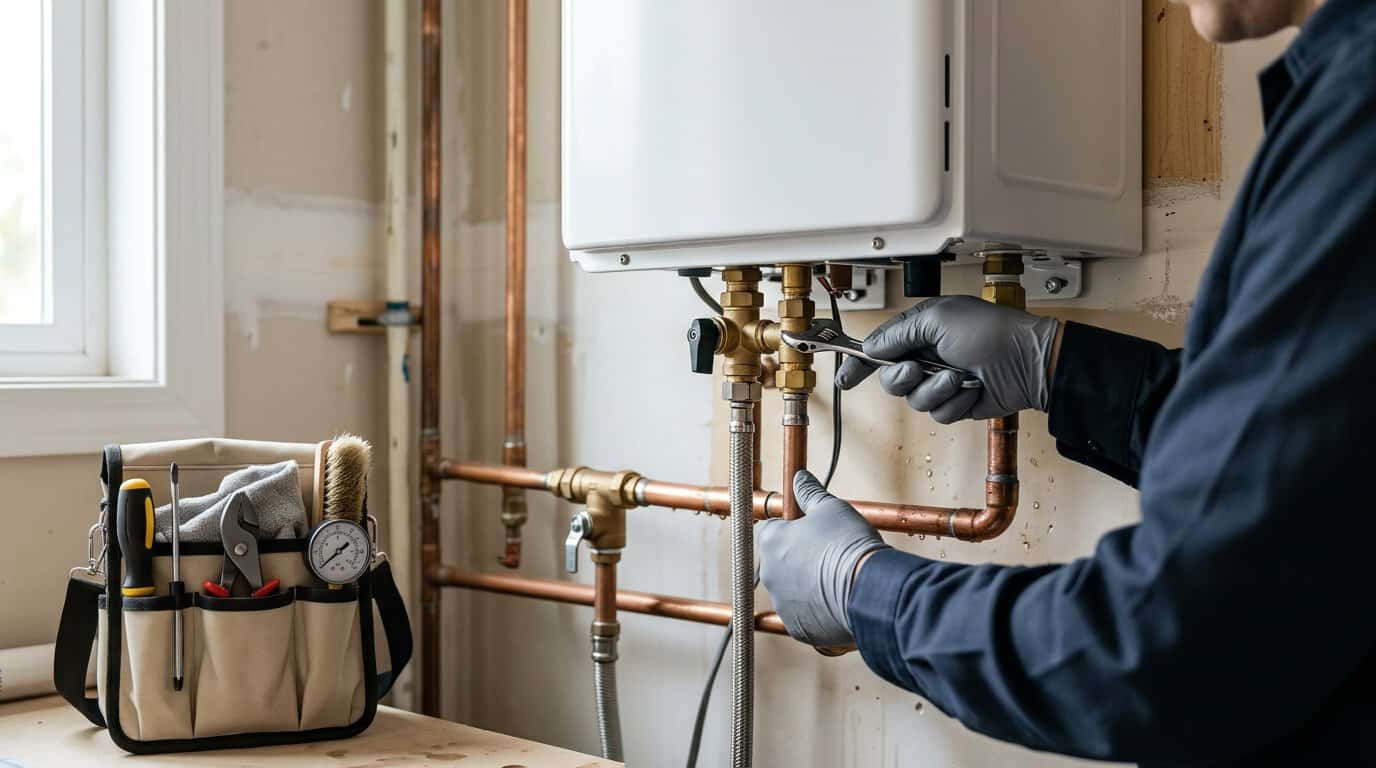
Mineral buildup can restrict the narrow passages in your tankless water heater’s heat exchanger, reducing efficiency and causing temperature changes or error codes. Periodic descaling, also called flushing, removes calcium and magnesium deposits before they affect performance. Your owner’s manual will set the right schedule, which may range from about six months to three years based on water hardness, household use, water temperature, and the model. Clean the inlet filter during routine service, and inspect the system for leaks, blocked vents, and signs of corrosion. If you have an outdoor unit, protect it from freezing temperatures as directed by the manufacturer.
Pay attention to warning signs such as inconsistent hot water, reduced flow, unusual noises, or repeated error codes. Timely repairs can help prevent a small filter, sensor, or valve problem from causing a larger failure. Tankless systems do not require the same tank draining routine as traditional water heaters, but they still need regular attention because mineral deposits can build inside the heat exchanger. Follow your owner’s manual and schedule professional inspections for gas connections, burners, venting, and other parts you should not service yourself. Since 1981, our team has helped Chapel Hill area homeowners with water heater service. Contact us when your system needs skilled maintenance or repair.
Keep Your Tankless Heater Flowing Efficiently
Mineral buildup can narrow the passages inside your tankless water heater, reducing water flow, efficiency, and temperature control. Regular flushing, also called descaling, dissolves these deposits and matters most in hard water areas around Chapel Hill and Durham. Your owner’s manual sets the right schedule, which may range from every six months to every three years based on water quality, usage, temperature, and model. You should also clean the inlet filter and watch for lukewarm water, fluctuating temperatures, unusual noises, error codes, or reduced flow. Gas units need professional inspections, especially when you notice ventilation concerns, burner problems, or signs of combustion trouble.
Unlike a traditional tank heater, your system does not store gallons of hot water, but its heat exchanger still needs regular care to work efficiently. Protect an outdoor unit from freezing weather, check for leaks, and consider a water quality test if mineral deposits return quickly after service. Taking these steps can help prevent expensive repairs and extend your system’s working life. If your heater needs attention, learn more through Who to Call for Water Heater Repair: Your Guide to Fast, Reliable Service and schedule the help your home needs.