
If your electric water heater is driving up your utility bills or nearing the end of its life, a heat pump water heater may offer a more efficient replacement. It moves heat from the surrounding air into the tank instead of creating heat with electric coils, which can cut electricity use by about 60 to 70 percent. That lower energy use comes with a higher purchase price and different operating needs.
Before you choose one for your Chapel Hill, Durham, Carrboro, Hillsborough, or Pittsboro home, consider your household’s hot water demand and the space around the tank. You will need room for airflow, a drain for condensation, and a location where modest fan noise and cooler air will not cause problems. Understanding recovery time, operating modes, and installation requirements can help you decide if a heat pump water heater fits your home.
Key Takeaways
- Heat pump water heaters can use about 60–70% less electricity than standard electric resistance units, potentially lowering water-heating costs, but they typically have higher upfront costs and slower recovery in the most efficient mode.
- Proper installation requires adequate airflow, manufacturer clearances, condensate drainage, service access, and a location that can accommodate modest fan noise and cooler surrounding air.
- Choose the tank size and first-hour rating based on peak household demand, including simultaneous showers, laundry, dishwashing, and other hot-water use.
- Operating modes balance efficiency and recovery: heat pump mode minimizes energy use, hybrid mode adds electric heating during high demand, and electric mode recovers fastest at a higher operating cost.
How Heat Pump Water Heaters Work
When your electric water heater creates heat with resistance elements, it can use a large amount of electricity. A heat pump water heater takes a different approach by moving heat from the surrounding air into the storage tank. A fan pulls room air across an evaporator coil, where refrigerant absorbs the air’s heat and changes into a gas. A compressor then raises the refrigerant’s temperature before it reaches the condenser, which transfers that heat into the water. The cooled refrigerant returns to the evaporator, and the cycle repeats, much like a refrigerator working in reverse.
During periods of high demand, such as when several family members take showers close together, backup electric heating elements can help warm the tank more quickly. In normal operation, the heat pump typically uses about 60 to 70 percent less electricity than a traditional electric water heater, though recovery can take longer in its most efficient mode. You also need enough space around the unit for airflow, along with a plan for condensate drainage. Because the system draws heat from the room, it can slightly cool the surrounding area, which may be helpful in a warm utility space but less desirable in a small, conditioned room.
Heat Pump Water Heater Efficiency
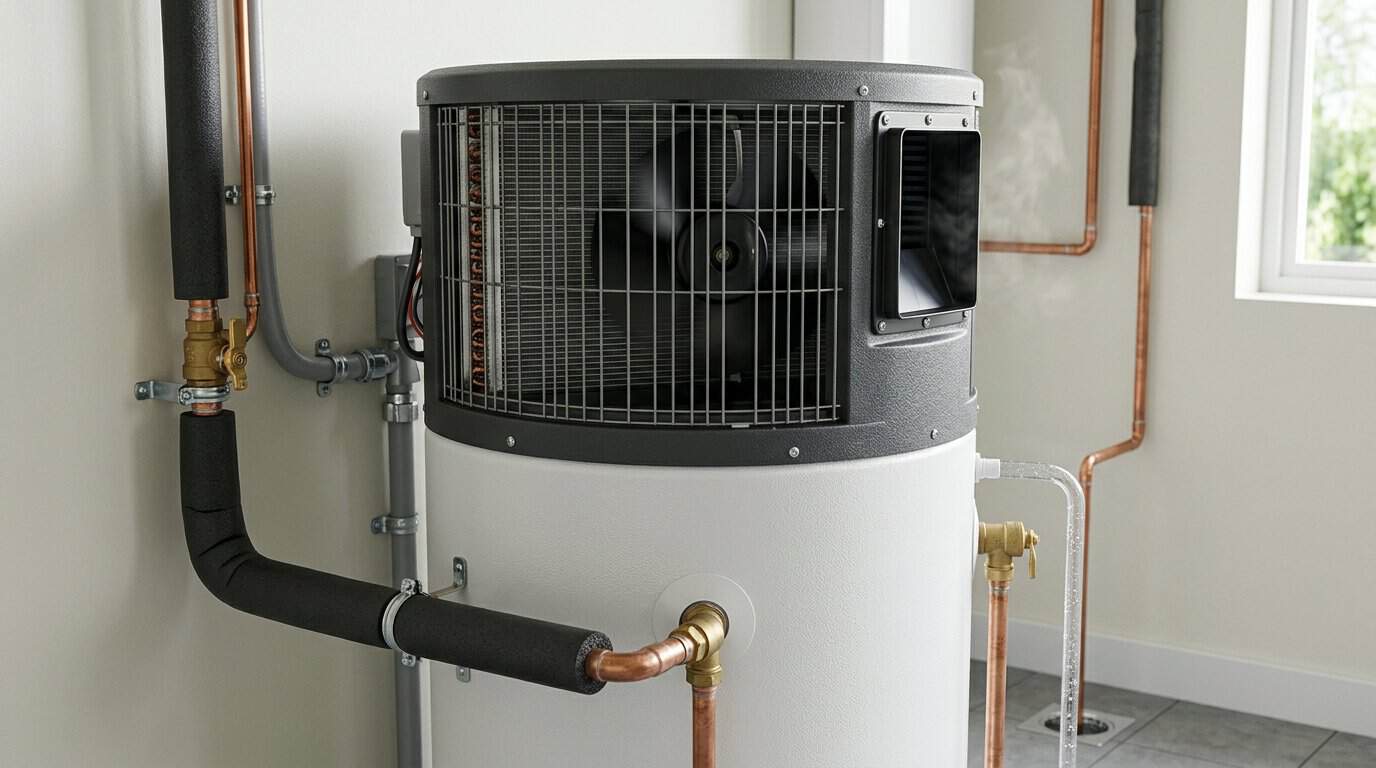
Traditional electric water heaters create heat with electric elements, so they can use a large amount of electricity to keep your tank hot. A heat pump water heater works differently by moving heat from the surrounding air into the water. Properly installed ENERGY STAR certified models can use about 60 to 70 percent less electricity than standard electric resistance units. That difference can lower your monthly water heating costs, especially for households that use a lot of hot water.
Your heat pump water heater may offer several operating settings for different needs. Heat pump mode uses the least electricity, while hybrid mode combines the heat pump with electric elements when your family needs hot water more quickly. Electric mode can provide faster recovery, but it uses more energy, and heat pump mode usually takes longer to reheat the tank after heavy use. Vacation and scheduling settings can also reduce energy use when your home is empty.
You will need enough space around the unit for air movement, along with a way to drain the condensate it produces. The system can slightly cool the room and make a modest amount of fan noise, so placement matters in a garage, utility room, or basement. For homes in Chapel Hill, Durham, Carrboro, Hillsborough, Pittsboro, and nearby communities, a heat pump water heater can be a good fit when your household has steady hot water needs and enough installation space. Your actual savings will depend on local electricity rates, water use, tank size, and the settings you choose.
Heat Pump Water Heater Installation Space
A heat pump water heater needs more room around it than a standard electric tank because it draws heat from the surrounding air. Leave the clearances listed by the manufacturer so air can move freely and a technician can reach the controls, filter, connections, and tank. The unit also produces condensate as it operates, so your installation needs a suitable drain, condensate pump, or other approved method to carry water away. Without proper drainage, moisture can collect near the equipment and damage floors or nearby materials.
You may hear a gentle fan or compressor sound while the system runs, but the operating noise is usually modest. The unit returns cooler, drier air to the room, which can be helpful in a damp basement but may make a small space feel chilly. Garages, basements, utility rooms, and conditioned spaces each present different concerns, including available airflow, winter temperatures, drainage, noise, and added cooling in the home. A garage may need freeze protection, while a finished utility room may need more attention to sound and room temperature.
Room size matters because a heat pump water heater can remove a noticeable amount of heat from a very small enclosure. Manufacturers often specify a minimum room volume or require ducting to bring in and discharge air, so check the model requirements before choosing a location. Your installer should also confirm household hot water demand, electrical service, code requirements, and access for future maintenance. Careful placement helps the system perform efficiently and gives your family dependable hot water.
Heat Pump Water Heater Sizing And Demand
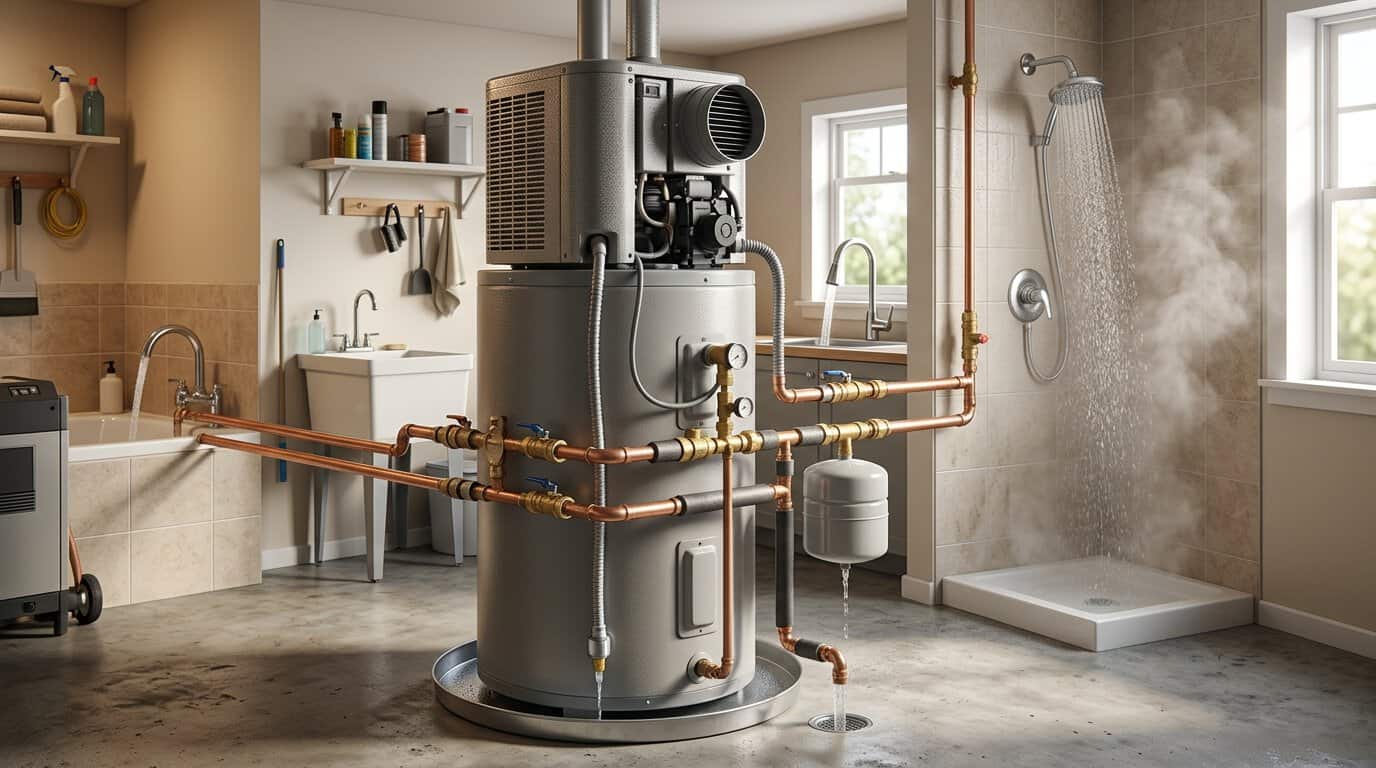
Running out of hot water during back to back showers usually means your water heater is not matched to your household’s peak demand. When you size a heat pump water heater, consider the number of people in your home, shower schedules, tubs, laundry, dishwashing, and other fixtures that may use hot water at the same time. A household of four with morning showers may need a larger tank or higher first hour rating than a household of four with showers spread throughout the day. Your installer should review both tank capacity and recovery rate, which shows how quickly the system can replace hot water.
Heat pump water heaters move heat from the surrounding air into the tank, so they use much less electricity than standard electric resistance models. Efficiency mode provides the lowest operating cost, but it may recover more slowly after heavy use. Hybrid mode combines heat pump operation with electric resistance heating when demand rises, while electric mode works more like a traditional water heater and can recover faster at a higher energy cost. Vacation mode lowers heating activity while you are away, which can reduce energy use without requiring you to shut the system off.
Backup heating elements help your system handle periods when several people shower, wash clothes, and run the dishwasher close together. They can also help during colder indoor conditions, since heat pump water heaters need suitable surrounding air and space to work efficiently. In Chapel Hill, Durham, Carrboro, Hillsborough, and Pittsboro homes, placement matters because the unit needs adequate clearance, a drain for condensation, and enough air volume around it. A garage, basement, or utility room may work well, but your installer should check temperature, noise, floor space, and nearby plumbing before choosing the tank size and operating settings.
Is a Heat Pump Water Heater Right for You?
A heat pump water heater can use about 60 to 70 percent less electricity than a standard electric resistance unit, which may lower your monthly energy costs. It moves heat from the surrounding air into the tank instead of creating heat directly, so it works most efficiently in a suitable location. The higher purchase and installation cost may take time to recover through energy savings. Your home, budget, and long term hot water needs should all factor into the decision.
Your installation area needs enough room for air movement, access for service, and a way to drain condensation. You may also notice a gentle fan sound, cooler air around the unit, and slower recovery when the system runs in its most efficient mode. A larger household with frequent showers or high hot water demand may need a properly sized tank or a model with additional heating modes. A professional can review your electrical connection, plumbing, drainage, and available space before recommending a system.
If you are replacing a water heater in Chapel Hill, Durham, Carrboro, Hillsborough, Pittsboro, or a nearby Triangle community, a qualified local professional can help you compare your options. Professional installers can provide heat pump water heater installation, replacement, and service based on your home and family’s needs. To plan your project or address an existing concern, explore “Who to Call for Water Heater Repair: Your Guide to Fast, Reliable Service” and contact a qualified local water heater professional for guidance.