
A heat pump water heater (HPWH) uses electricity to move heat from the surrounding air into stored water instead of generating heat directly with resistance elements. ENERGY STAR reports that certified models use 70% less energy than standard electric water heaters. Your savings depend on the model, household use, and installation.
An October 2024 ENERGY STAR estimate puts equipment costs at $1,500 to $3,000, plus $1,000 to $3,000 for installation labor and materials. For your home in Chapel Hill, Durham, Carrboro, Hillsborough, or Pittsboro, our technicians can check the available space, electrical and plumbing connections, and hot water needs before recommending a model.
Key Takeaways
ENERGY STAR certified HPWHs use 70% less energy than standard electric water heaters, but your savings depend on the model, household use, and installation.
A four person household could save about $550 a year and more than $5,600 over the unit’s lifetime, according to ENERGY STAR estimates, but actual savings are not guaranteed.
ENERGY STAR’s October 2024 estimate puts HPWH equipment at $1,500 to $3,000, plus $1,000 to $3,000 for installation labor and materials.
An HPWH needs enough airflow and service access, typically 450 or 700 cubic feet of free air space depending on the model, plus compatible connections and a way to drain condensate.
Your HPWH choice should match your home’s peak hot water use and installation conditions, and the article states that the federal Section 25C tax credit is not allowed for property placed in service after December 31, 2025.
How Does an HPWH Work?
An HPWH uses electricity to move heat from the surrounding air into water stored in a tank. A fan pulls air across a coil, where refrigerant absorbs heat. A compressor raises the refrigerant’s temperature, and the system transfers that heat to the water. Unlike a standard electric water heater, which uses resistance elements to heat water directly, an HPWH mainly moves existing heat.
The U.S. Department of Energy defines heat pump type water heaters as products that transfer heat to a higher temperature to heat water. The tank stores hot water for faucets, showers, and appliances, so the system heats and replenishes a supply rather than warming water only when you turn on a tap.
Many models include electric resistance elements as a backup. ENERGY STAR explains that some models switch to resistance heating when hot water demand is high, such as when several people need showers close together. A tankless water heater works differently. It heats water as you need it, without storing hot water in a tank.
How Efficient Is an HPWH?
An HPWH can use less electricity than a standard electric tank because it transfers heat from the surrounding air instead of producing all the heat with resistance elements. ENERGY STAR reports that certified models use 70% less energy than standard electric water heaters. Its June 2024 guide estimates that a four person household could save about $550 a year and more than $5,600 over the unit’s lifetime. Actual savings vary by home.
Uniform Energy Factor, or UEF, is a rating you can use to compare water heater efficiency. ENERGY STAR says UEF ratings follow a U.S. Department of Energy test method, so compare models that use the same rating method.
Equipment and installation can cost more upfront than a standard electric tank. Compare that initial cost with the model’s expected energy use, since your household’s hot water use and the installation can affect your bills.
What Does HPWH Installation Require?
Installing an HPWH requires enough surrounding air, service access, compatible electrical and plumbing connections, and a suitable way to drain condensate. ENERGY STAR says manufacturers typically require 450 or 700 cubic feet of free air space, depending on the model, along with room to reach the unit for service.
Placement matters because a unit in heat pump mode draws heat from the surrounding air and cools the area. A basement or utility room may work, but a technician should consider how that cooling could affect the space and whether the location provides enough airflow. ENERGY STAR’s FAQ describes this cooling effect.
Before recommending a model, a qualified technician should check service clearance, electrical and plumbing connections, and a practical route for condensate drainage. A 120 volt model may be an option, but the right model depends on your home’s electrical setup and the product’s requirements. The U.S. Department of Energy noted the introduction of 120 volt models. Bud Matthews Services has served Chapel Hill, Durham, and Chatham County since 1981, with plumbing and electrical work available alongside water heater service.
How Much Hot Water Does Your Home Need?
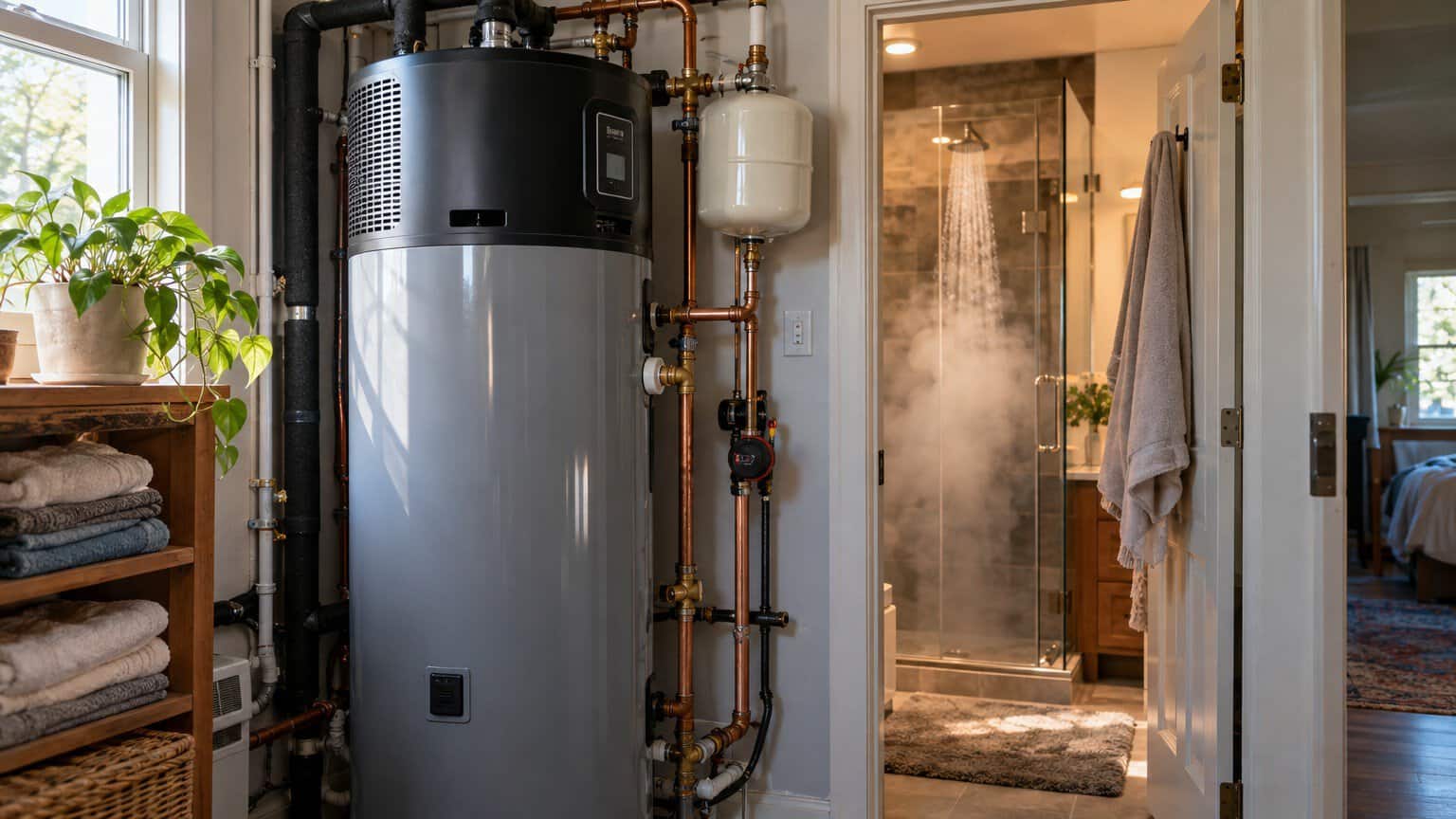
Your home needs enough tank capacity and recovery capability to meet peak hot water demand. Choose a model based on your actual use, not household size alone.
Note when showers overlap, whether laundry runs during a shower, and whether you use the dishwasher during the same stretch. These routines can create higher peak demand than household size suggests. A larger tank is not always the answer if recovery speed and timing meet your needs.
Many HPWH models can switch to electric resistance heating when demand is high, helping replenish hot water during busy periods. Features and settings vary by model.
Before selecting a replacement, discuss future household changes and your existing tank’s performance with an installer. Frequent hot water shortages during busy periods can help show whether you need more storage, faster recovery, or both.
Heat Pump vs. Electric and Tankless Water Heaters
A standard electric storage water heater uses resistance elements to heat water directly. An HPWH moves heat from surrounding air into water stored in its tank, so the two systems use electricity in different ways.
For a 50 gallon, 240 volt model, ENERGY STAR’s spring 2024 figures put HPWH equipment at $1,500 to $2,000, compared with $400 to $900 for a standard electric storage heater. Those figures cover equipment, not the full replacement project.
A tankless water heater heats water when you open a tap instead of storing hot water in a tank. The better fit depends on your household’s hot water use, available space, and the installation work each type requires.
An HPWH’s tank takes up room and needs airflow and service access. ENERGY STAR’s October 2024 project estimate lists equipment at $1,500 to $3,000 and installation labor and materials at $1,000 to $3,000. Installation costs vary widely based on your home and project.
When comparing project budgets, account for current federal tax rules. The IRS states that the federal Section 25C tax credit is not allowed for property placed in service after December 31, 2025.
Is an HPWH Right for Your Home?
An HPWH may suit your home if you have enough installation space and want to reduce the electricity used for water heating compared with a standard electric tank. It may be harder to install if your available space, airflow, service access, or household hot water demand does not match the model’s requirements.
If you are replacing an aging unit in Chapel Hill, Durham, Carrboro, Hillsborough, Pittsboro, or a nearby community, the existing location is one part of the assessment. The right replacement also depends on your system connections and when your household uses hot water.
An on site assessment lets a local plumbing professional review the replacement location and your household’s demand before recommending a unit. Bud Matthews Services installs and services HPWHs and has served Chapel Hill, Durham, and Chatham County since 1981.
Plan Your Water Heater Replacement
If your current water heater is leaking, losing hot water, or nearing replacement, arrange an assessment before choosing an HPWH model. Have the tank’s location and available model information ready, along with a note about when your household runs short of hot water. This gives the technician useful details before evaluating the replacement.
Bud Matthews Services installs and services HPWHs in Chapel Hill, Durham, Carrboro, Hillsborough, Pittsboro, and nearby Triangle communities. Family owned and serving Chapel Hill, Durham, and Chatham County since 1981, Bud Matthews Services can coordinate plumbing and electrical checks as part of your project. Ask for a project quote that separates equipment costs from any work needed to adapt the installation.
If you are comparing an HPWH with another replacement option, ask how the proposed setup fits your available space and household’s hot water schedule. Call 919.929.0203 or visit BudMatthews.com to schedule an HPWH replacement assessment with Bud Matthews Services.
Frequently Asked Questions
1. How loud is an HPWH while it runs?
ENERGY STAR Version 5.0 sets a sound emission limit below 55 dBA for certified HPWHs, about the level of a background conversation. Check the model’s specifications and consider its location if the unit will be near living areas.
2. How often does a heat pump water heater need maintenance?
Your heat pump water heater’s maintenance schedule depends on the model, so follow the manufacturer’s instructions rather than assuming one schedule fits every unit. Check the manual for care specific to your system, and arrange service if you notice unusual noise, drainage problems, or a change in hot water performance.
3. Can an HPWH replace a gas or propane water heater?
A heat pump water heater can replace a gas or propane unit if your home can support the new system’s electrical and plumbing connections, airflow, and condensate drainage needs. A technician should assess the installation location and connections before recommending a model. The U.S. Department of Energy’s water heater information describes heat pump water heaters as using electricity to transfer heat.